Head Space
Solo Presentation of artwork by Jamie Isenstein
Crisp-Ellert Art Museum, Flagler College, Saint Augustine, FL
March 3 – April 15, 2017
Curated by Julie Dickover
Press release and work details below.
Works in the exhibition:
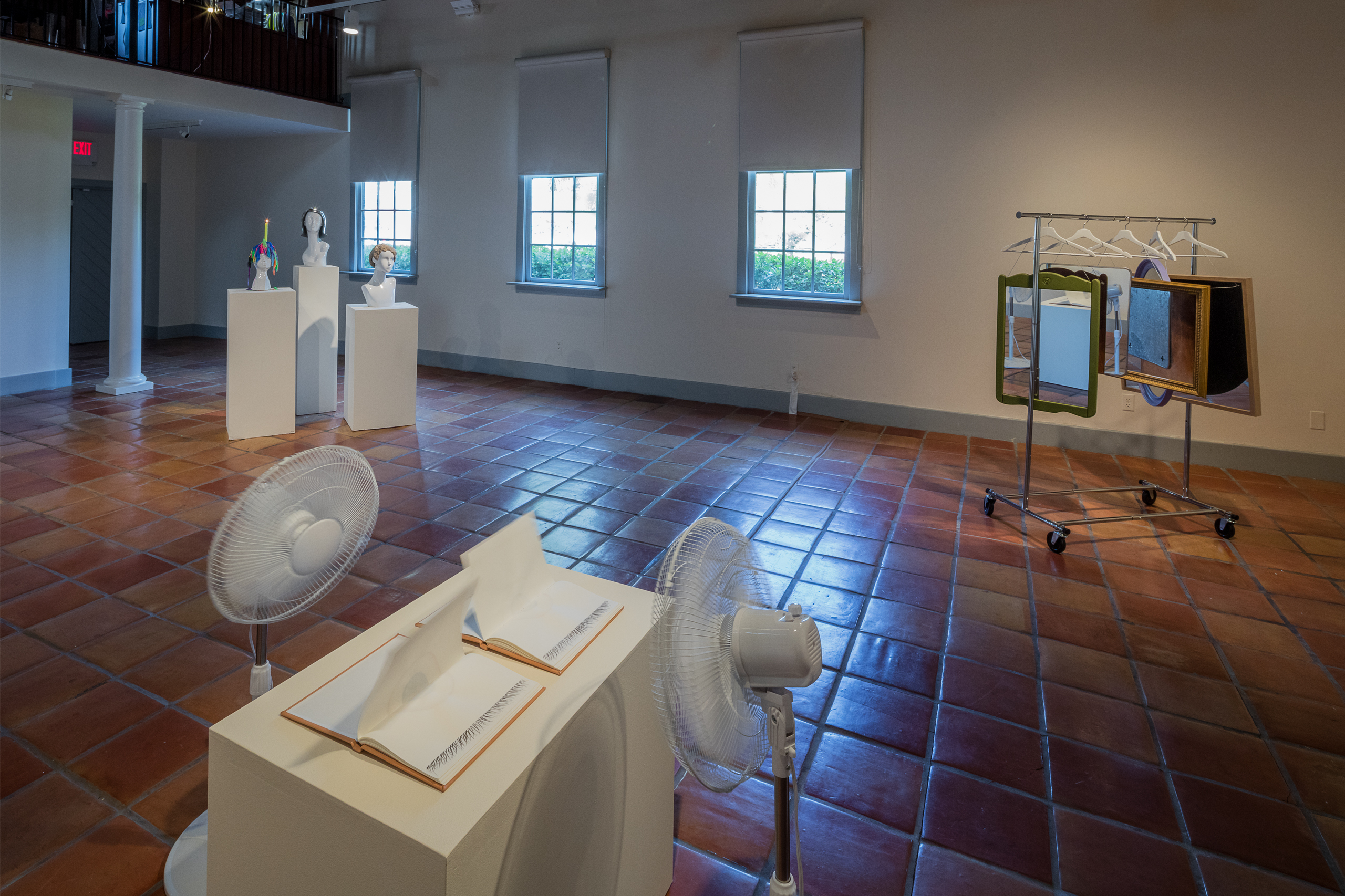
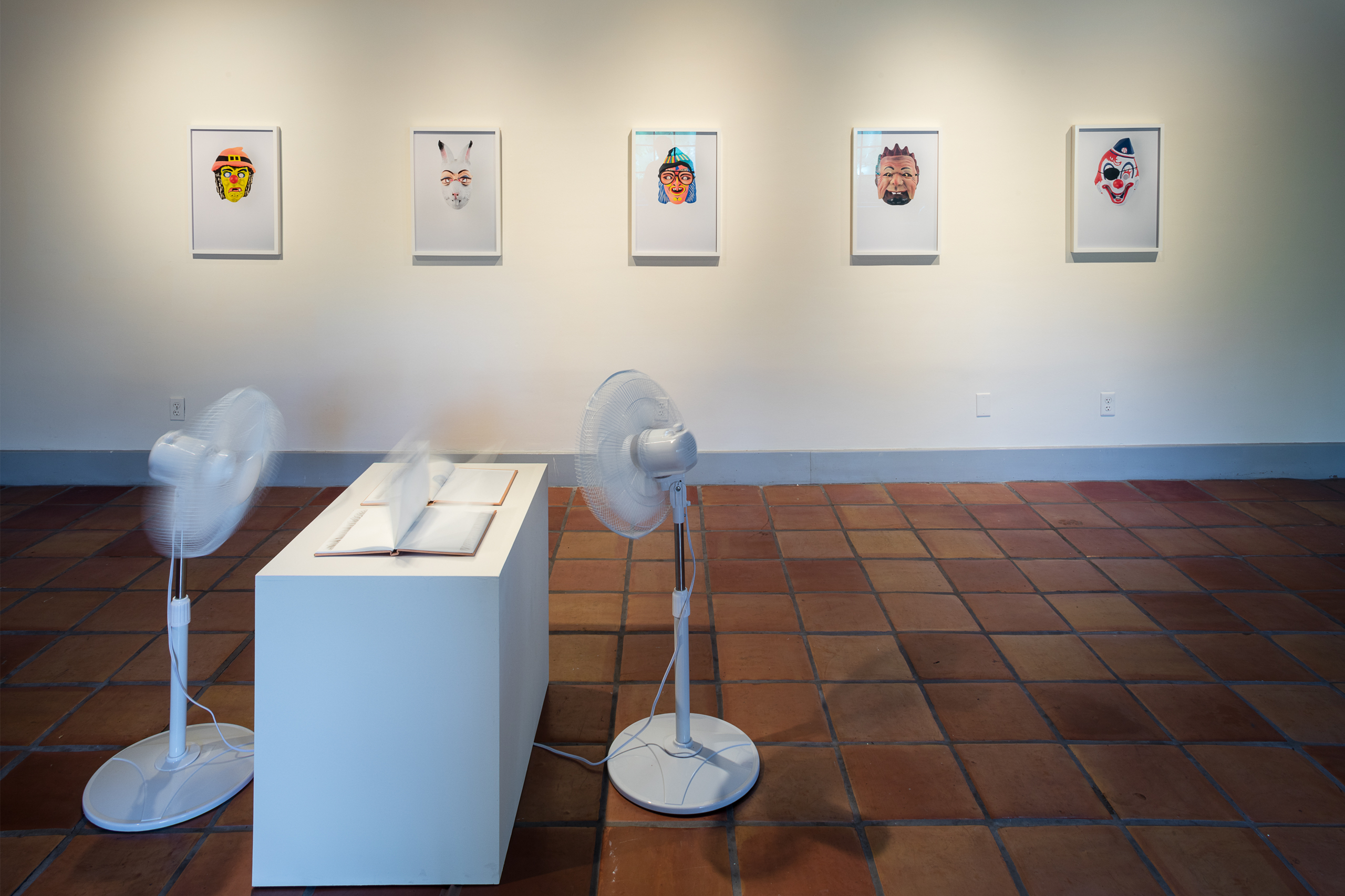
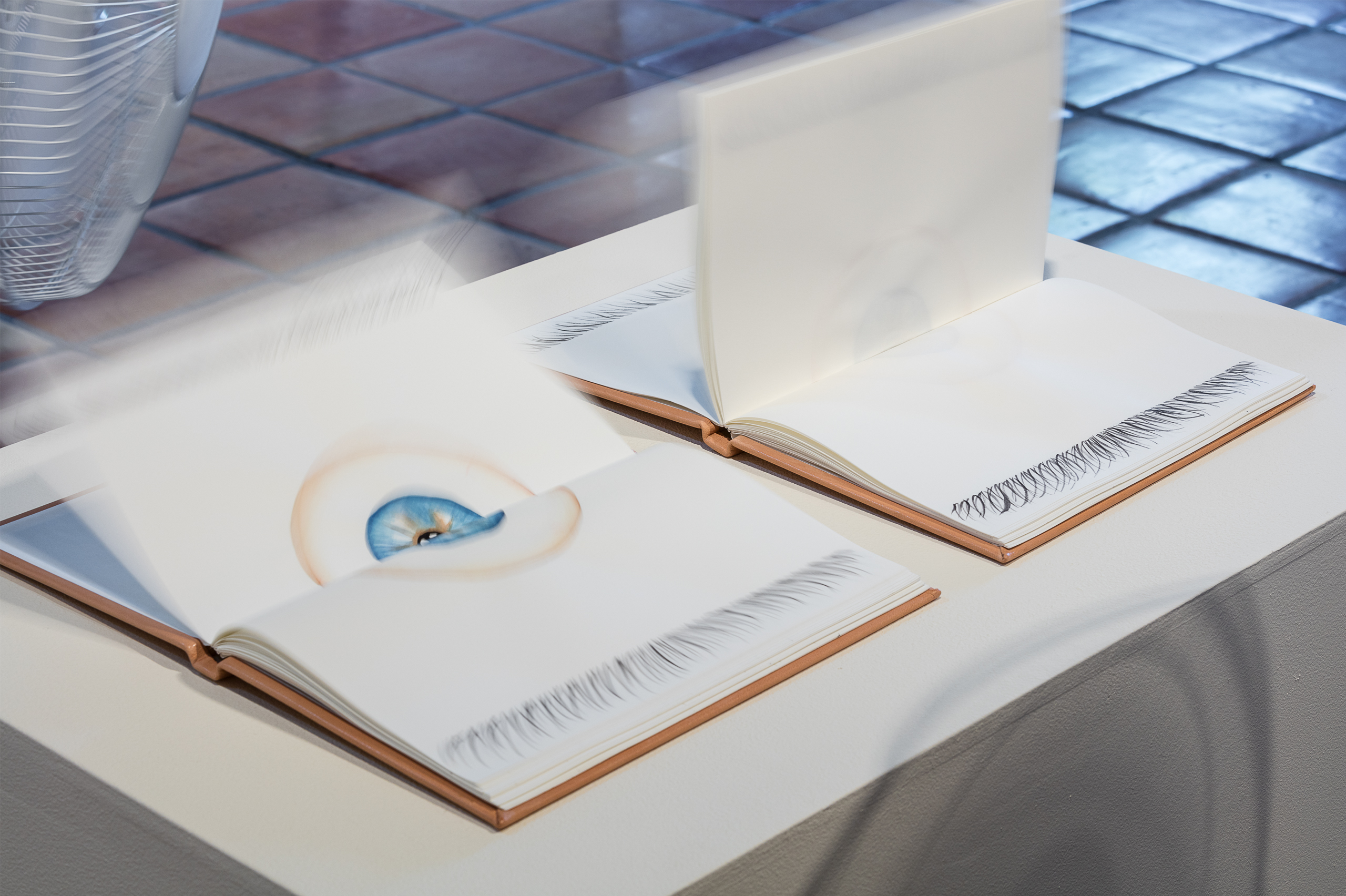
Eye Books, 2015
Two leather-bound watercolor books, two oscillating fans
Dimensions variable
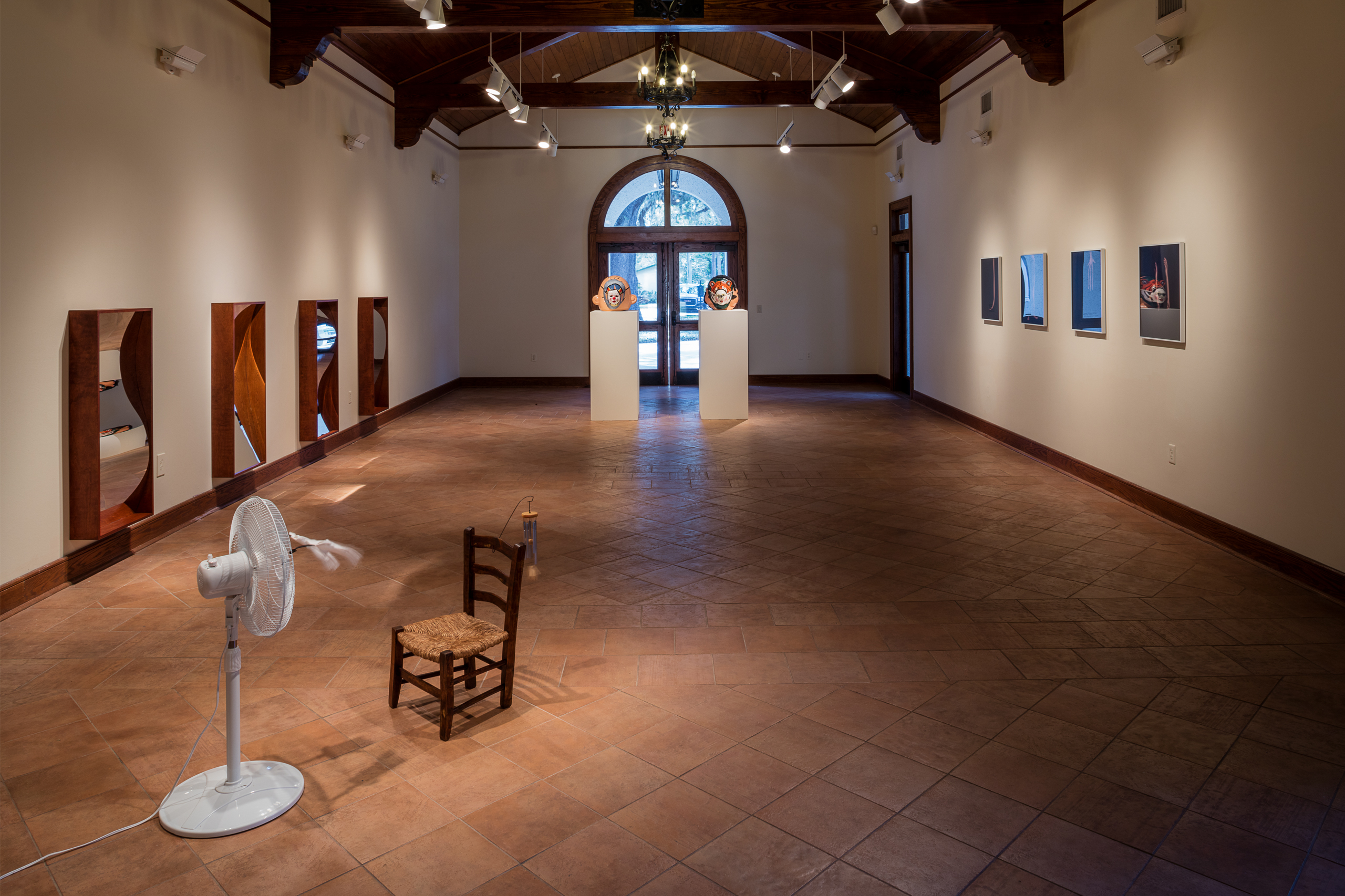
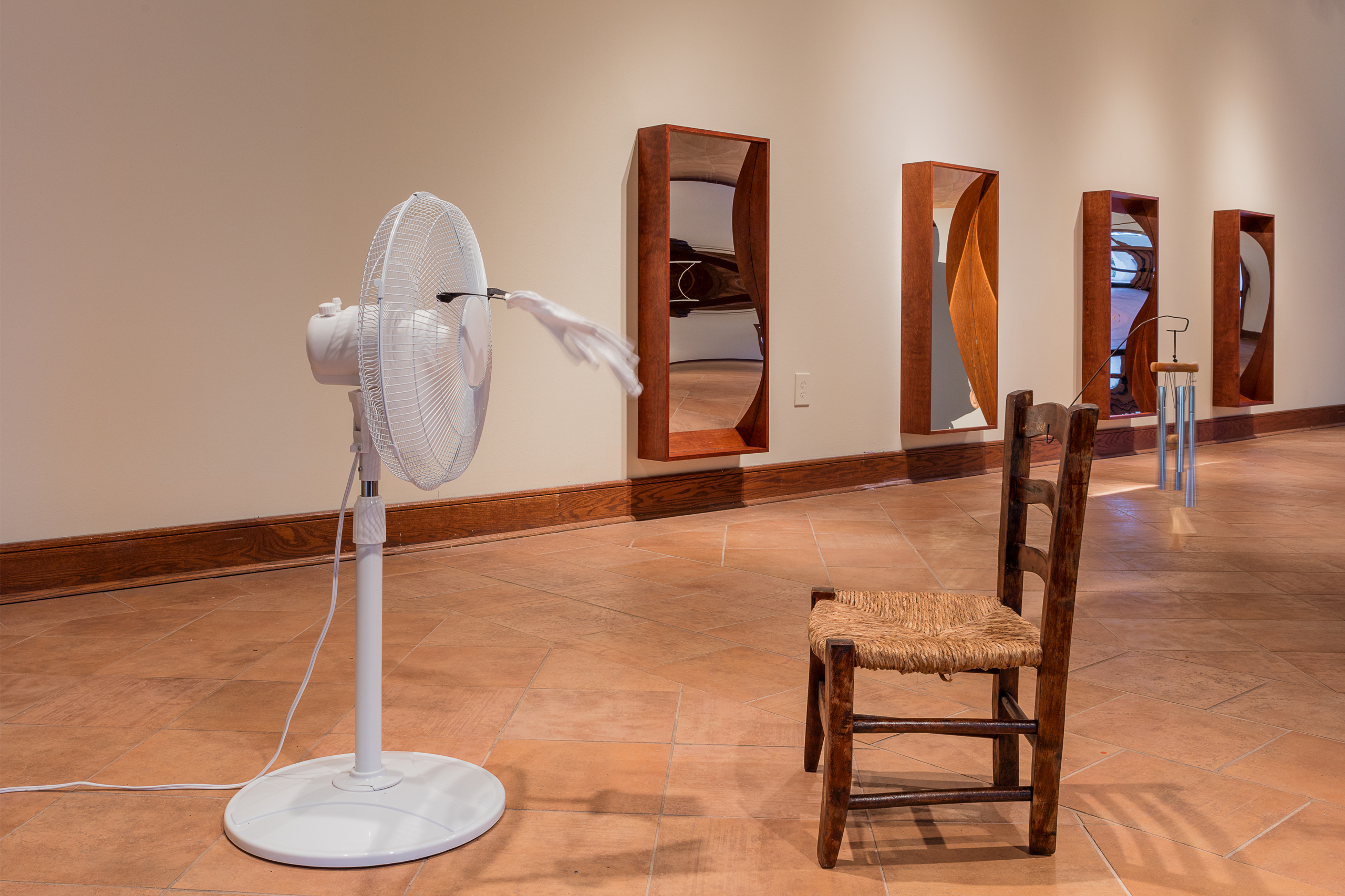
Para Drama, 2015
Small chair, chimes, oscillating fan, cotton gloves, leather,
metal
24 x 13 x 14 1/2 in
61 x 33 x 36.8 cm
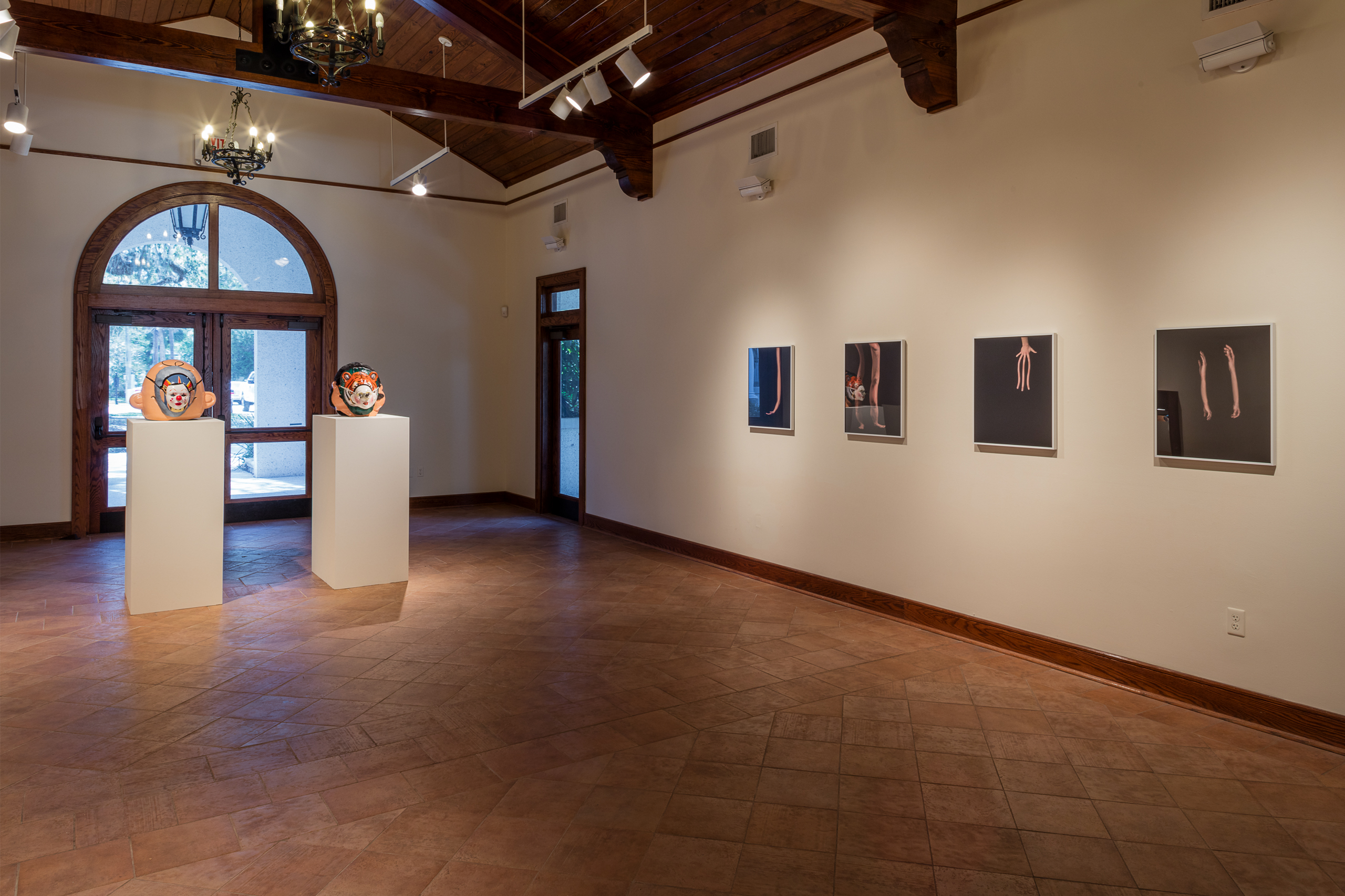
Masks Wearing Masks (Japanese Noh Old Man, Pink Witch Aviator, Yellow Witch Clown, Rabbit Bunny, Clown Pirate), 2015
C-print
24 1/4 x 16 5/8 in each
61.6 x 42.2 cm each
Onions (Mario to Clown Mouse), 2015
Synthetic hair, paper mache, acrylic paint, mesh, plastic,
ribbon, ceramic, string and rubber
16 x 20 x 16 in
40.6 x 50.8 x 40.6 cm
Onions (Charlie Brown to Clown Clown), 2015
Paper mache, acrylic paint, rope, ribbon, string and plastic
17 x 17 x 20 in
43.2 x 43.2 x 50.8 cm
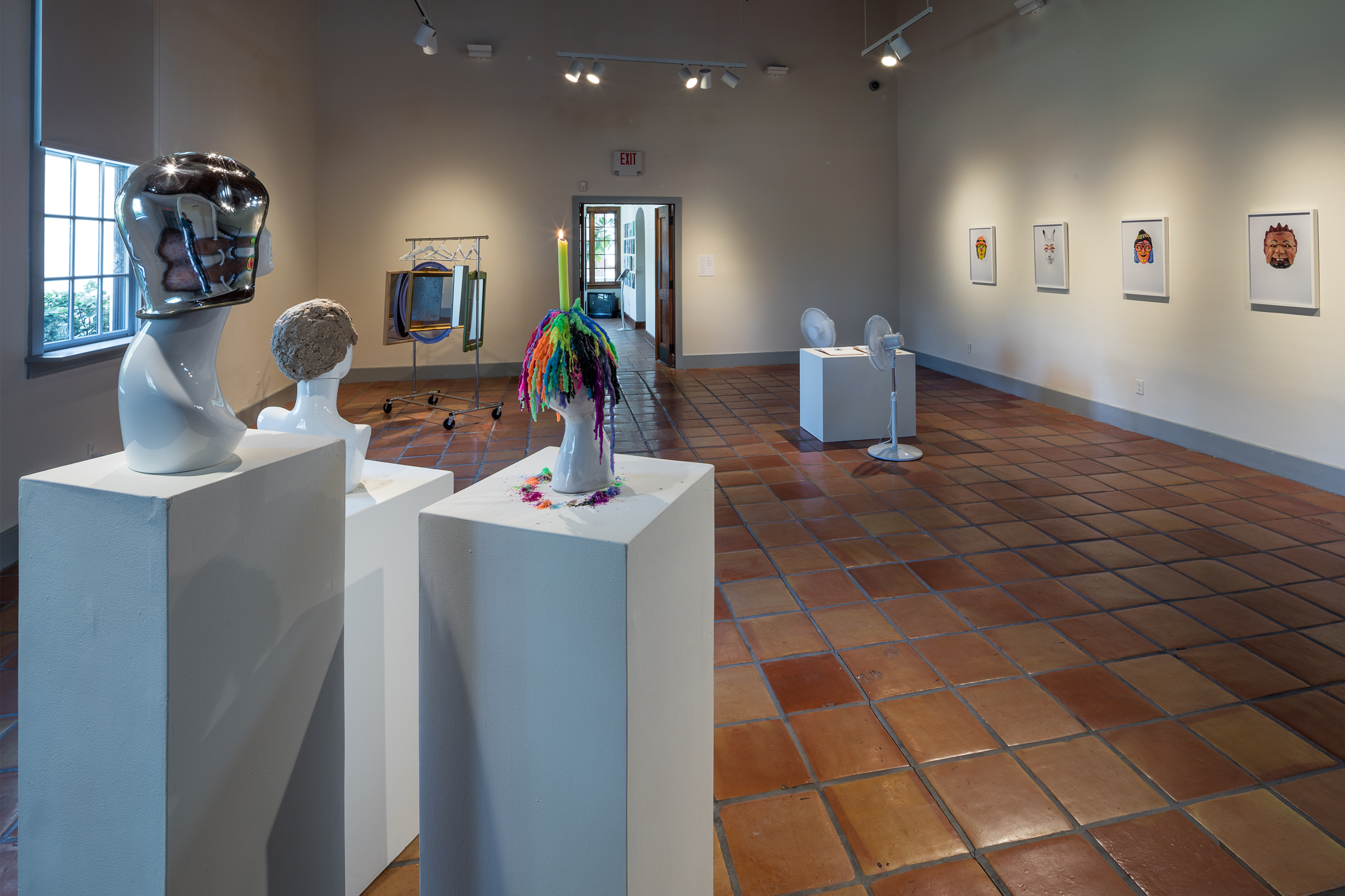
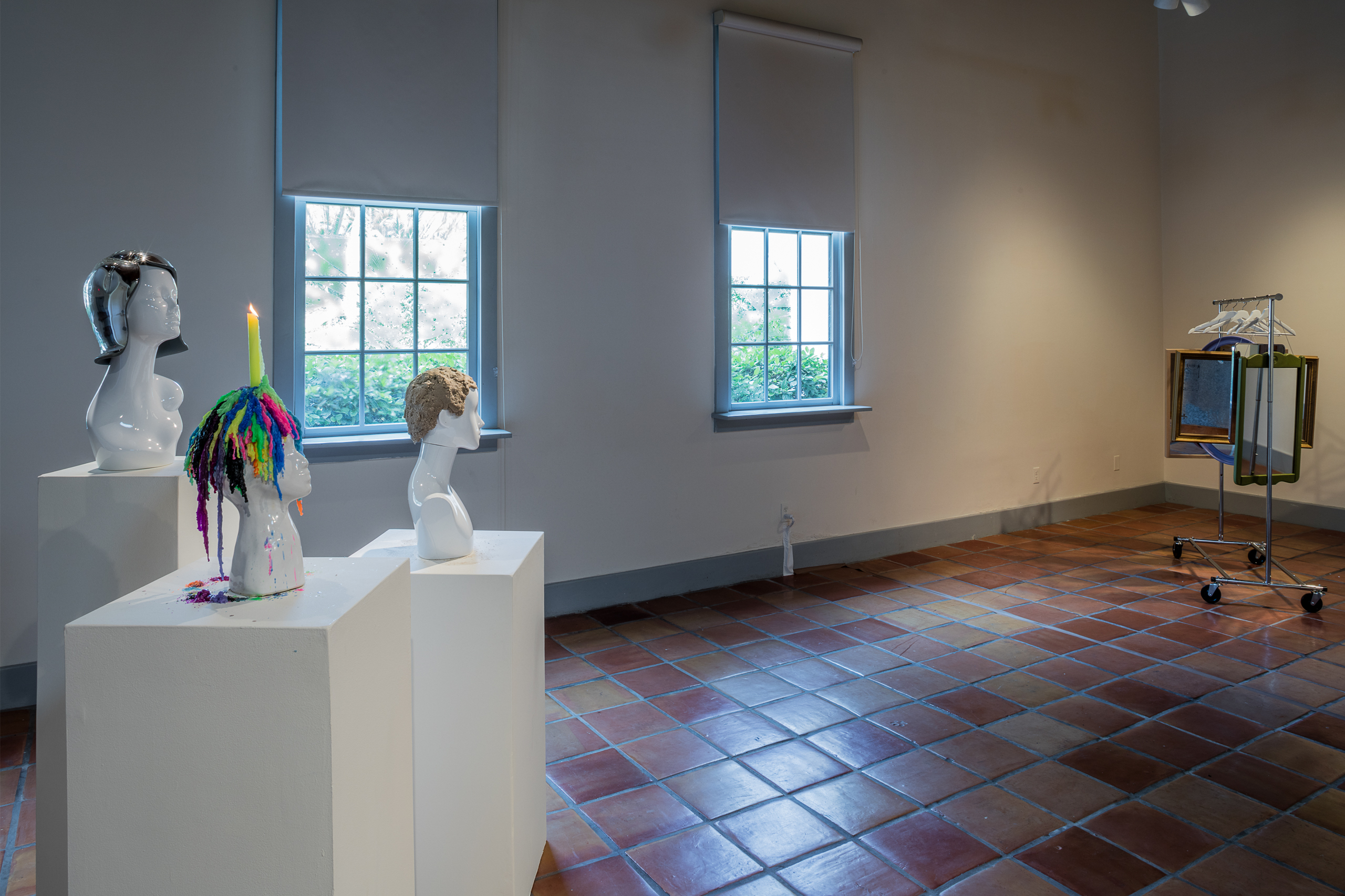
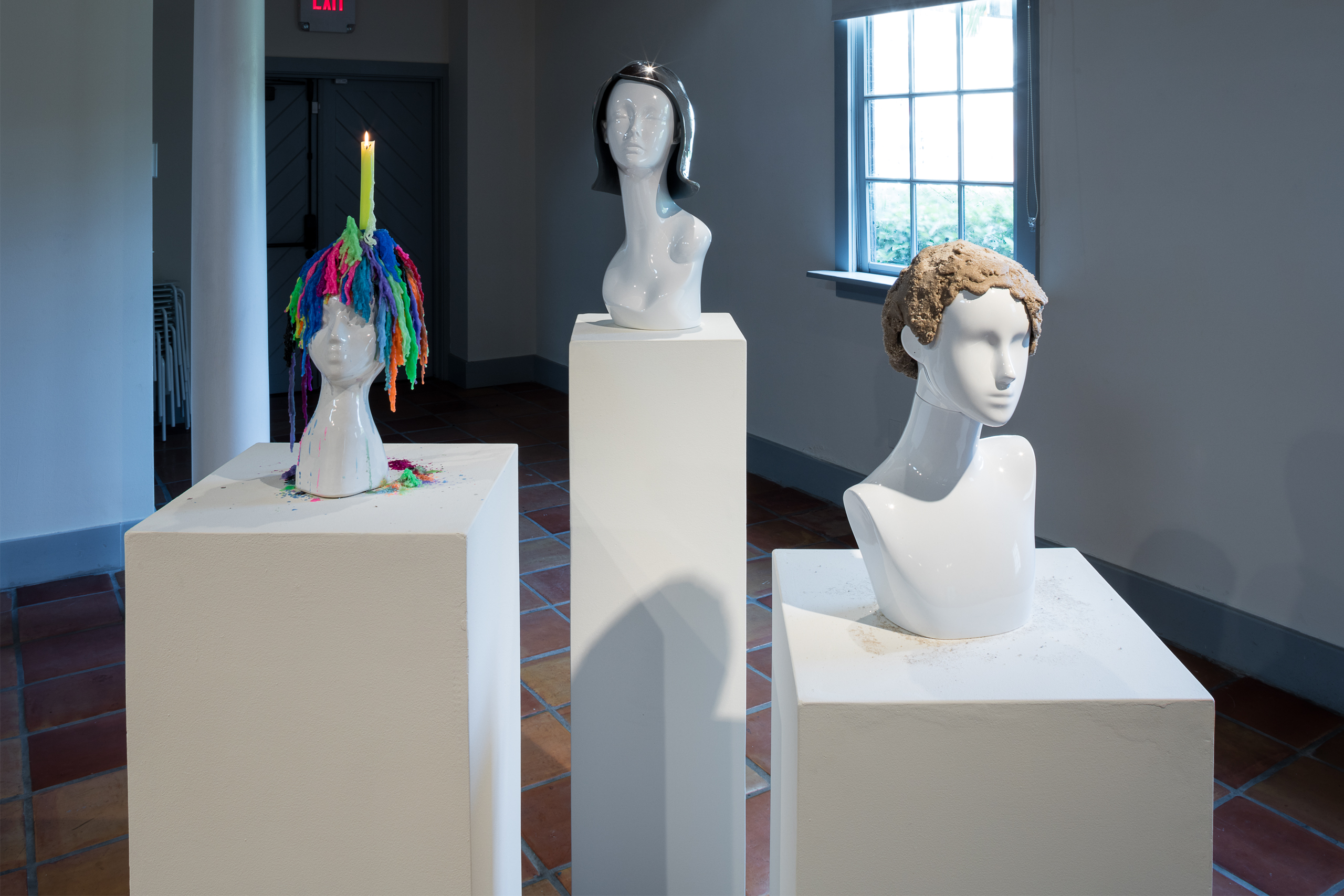
Vanity Vanitas, 2016-2017
Melted candles, ceramic mannequin, sand, PVA glue, silvered glass, fiberglass mannequins
Candle wig: 15.5 x 7 x 8 in
Sand wig: 15.5 x 7 x 8 in
Mirror wig: 15.5 x 7 x 8 in
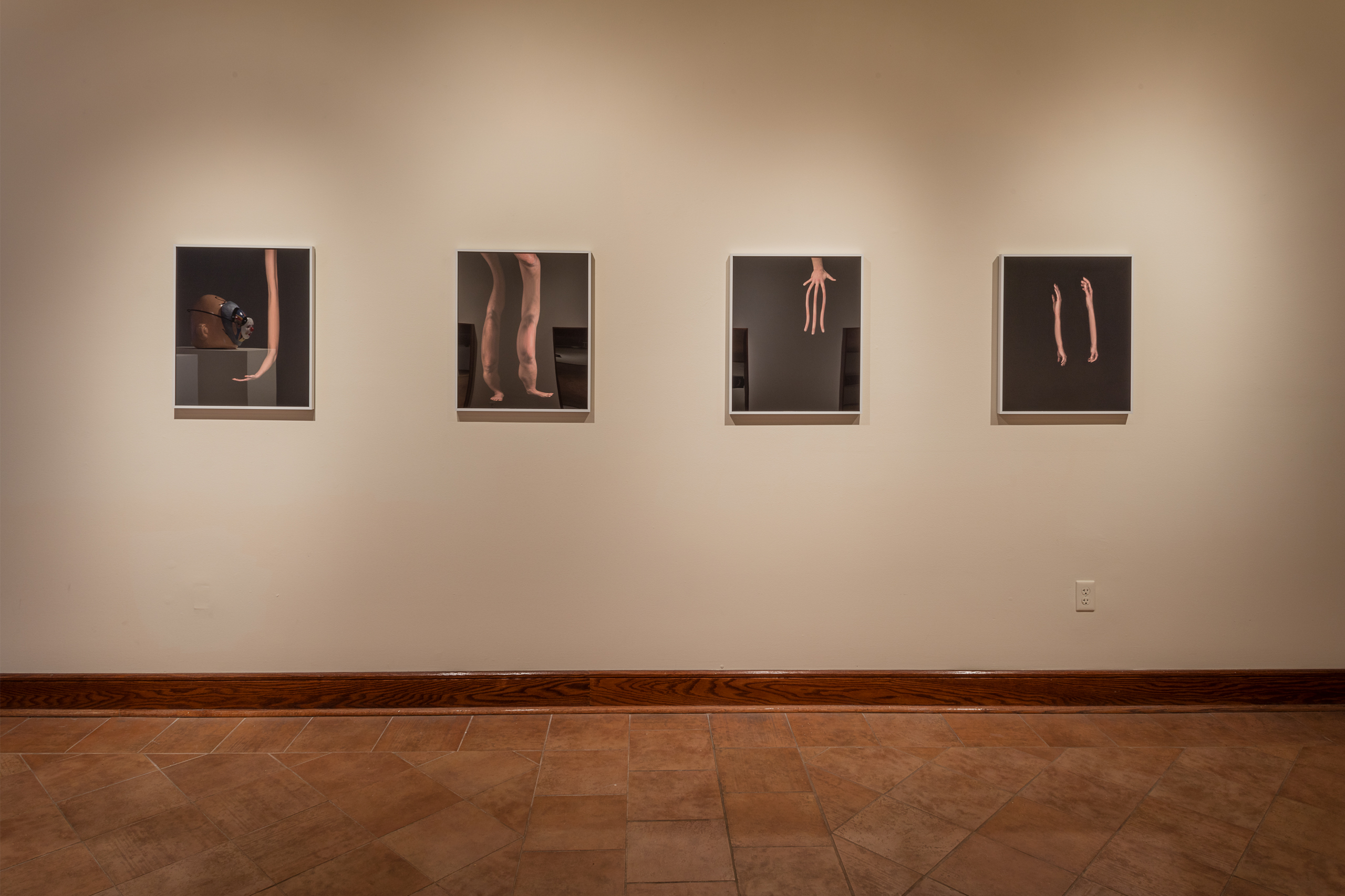
Body of Mirrors (Four Hands, Two Arms), 2017
C-print mounted on museum board
20 x 24″
Body of Mirrors (Wavy Legs), 2017
C-print mounted on museum board
20 x 24″
Body of Mirrors (Trident Hand), 2017
C-print mounted on museum board
20 x 24″
Body of Mirrors (Long Curved Arm), 2017
C-print mounted on museum board
20 x 24″
Gallery of Ice Cream, 2017
plexi glass, wood
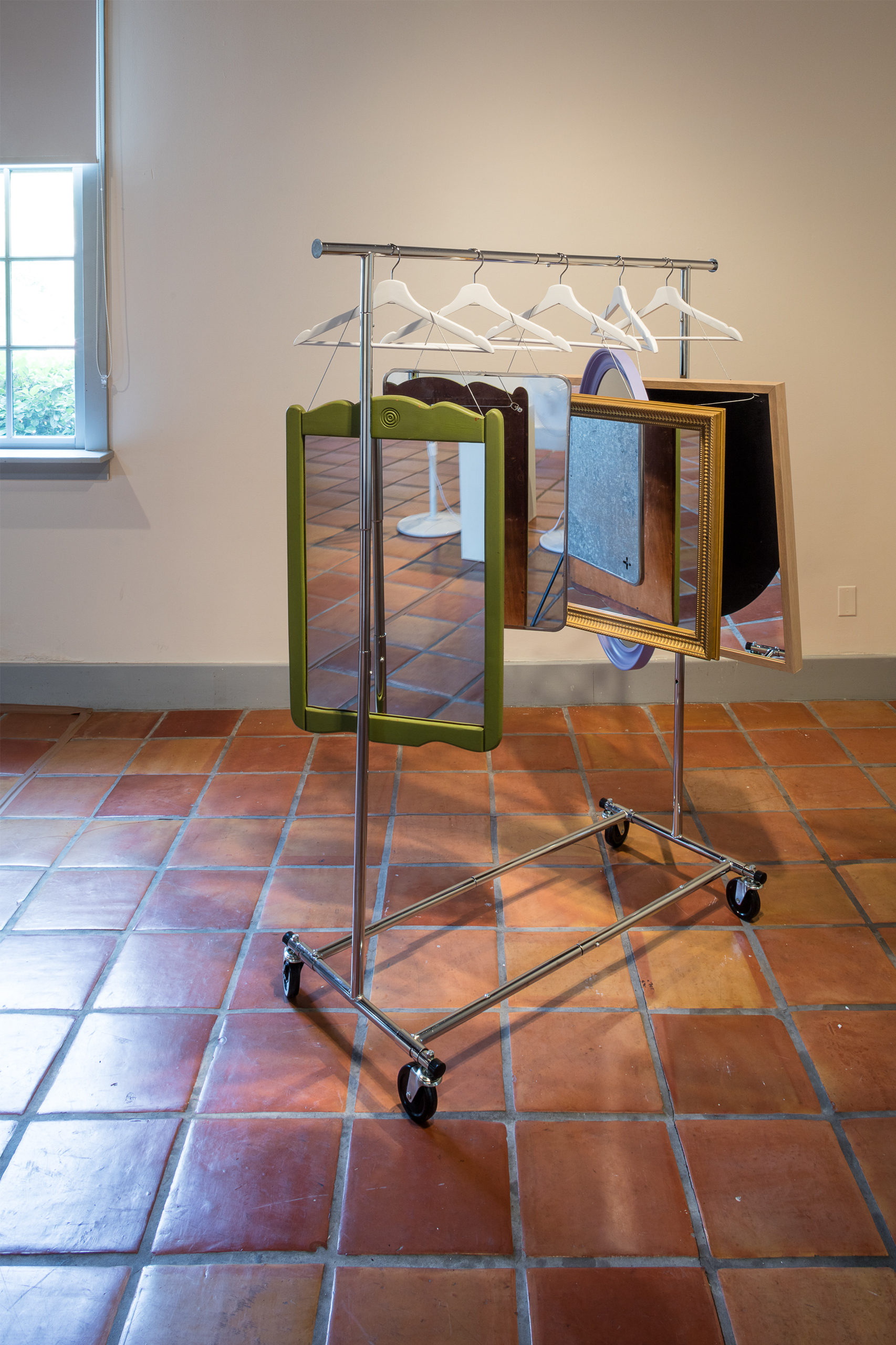
Infinite Closeout Closet (v 2), 2016-2017
Six mirrors, hangers, wire, garment rack
60.5″ x 60.25″ x 22″
From the press release:
“The Crisp-Ellert Art Museum and Flagler College will present work by New York-based artist Jamie Isenstein March 3 to April 15. The exhibition, “Head Space,” kicks off with a walk-through by the artist, at 4 p.m. on Friday, March 3, and will be followed by a reception from 5 p.m. to 9 p.m. The event is free and open to the public.
Isenstein’s abiding interest in dualities of truth and illusion, high and low culture, and life and death, along with her embrace of vaudeville, slapstick and “artful deception,” has resulted in a playful body of work that spans photography, sculpture, video and performance. Although she has often used herself as a prop within her sculptures, “Head Space” marks a departure for the artist. In this exhibition, her body is conspicuously absent and is instead replaced by disguises, automatons and the viewers themselves.
Works in the show include 2015’s “Eye Books” and “Para Drama.” Both sculptures utilize oscillating fans to form improvised automatons. Books and gloves become stand-ins for the body and appear to have taken on a life of their own, except the mechanical source of their aliveness is clearly visible. The series of photographs “Masks Wearing Masks,” 2015 also personifies objects by suggesting Halloween masks may want to disguise themselves. The sculptures “Onions,” 2015 with titles inspired by the Henrik Ibsen play “Peer Gynt,” takes this concept one step further, to meditate on the emptiness at the heart of masks wearing masks.
Other works in the show reflect on the body within the space of commerce. “Vanity Vanitas,” 2016-2017 is a series of wigs on mannequin busts. Each wig, one of sand, another a mirror, a third made from candles, references Baroque symbols of mortality. “Infinite Closeout Closet,” 2017 is a collection of mirrors hung from a garment rack. Rather than displaying clothes for sale, the garment rack presents viewers to themselves.
In a new series of photographs, “Body of Mirrors,” and sculptures, “Gallery of Ice Cream,” both 2017, the artist employs curved mirrors as a mechanism to consider our sense of the body as disjointed, distorted or exaggerated. Isenstein’s title for the sculptures comes from a comic mis-translation of “Galerie des Glaces” at Versailles, known in English as the “Hall of Mirrors.” While the experience of looking at these works may be one of entertainment, Isenstein suggests the fundamental mis-translation that occurs is a more accurate psychological portrayal of how we experience our bodies than the more “authentic” image we see in a normal mirror. Likewise, the staged photographs of arms and legs that float against a black background, are elongated, distorted and duplicated in post-human ways, reminding us of the body’s malleability in an age of technology and ultimately, as Isenstein has reflected, what it means to be human.”